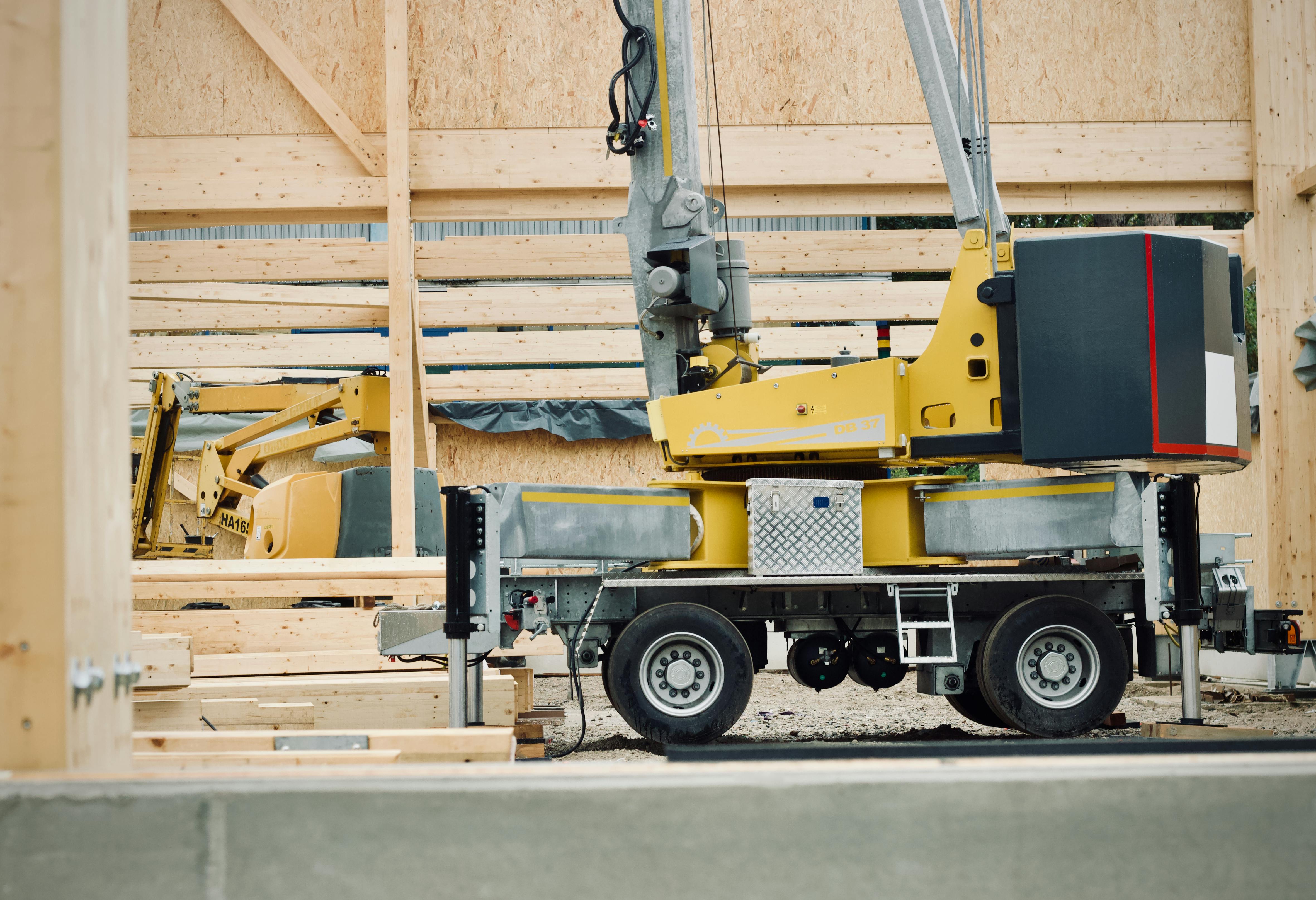
The construction industry continues to evolve as innovative materials and advanced building methods redefine what is possible. Among the most significant developments in modern commercial construction is mass timber. Once viewed as a specialty building material, mass timber has become a preferred solution for architects, developers, institutions, and business owners seeking structures that combine sustainability, efficiency, structural performance, and exceptional architectural design.
At Timber Group, we believe mass timber is more than an emerging trend—it represents the future of commercial construction. From office buildings and educational facilities to hospitality venues, cultural centers, and mixed-use developments, mass timber creates opportunities to build high-performing spaces that are environmentally responsible, visually striking, and designed to serve communities for generations.
By combining advanced engineered wood products with expert planning, precision manufacturing, and experienced construction management, mass timber projects can often be completed more efficiently while delivering long-term value for owners and occupants alike.
Understanding Mass Timber Construction
Mass timber refers to a family of engineered wood products specifically developed for structural applications in commercial and institutional buildings. Unlike traditional framing lumber, these products are manufactured by bonding or mechanically fastening multiple layers of wood together to create large structural components capable of supporting substantial loads.
Products such as Cross-Laminated Timber (CLT), Glue-Laminated Timber (Glulam), Nail-Laminated Timber (NLT), Dowel-Laminated Timber (DLT), and Laminated Veneer Lumber (LVL) allow designers to construct larger buildings while taking advantage of wood's natural strength, beauty, and sustainability. These engineered systems provide the structural reliability needed for modern commercial projects while offering a distinct architectural character that traditional materials cannot easily replicate.
Why Mass Timber Is Changing Commercial Construction
Mass timber addresses many of today's biggest construction challenges. Owners want projects completed faster, developers seek greater efficiency, architects desire increased design flexibility, and organizations are placing greater emphasis on environmental responsibility. Mass timber successfully supports all of these objectives while creating buildings that perform exceptionally well throughout their lifespan.
As building codes continue to evolve and engineered wood technology advances, mass timber is becoming an increasingly practical solution for a wide variety of commercial construction projects.
A More Sustainable Building Solution
Environmental responsibility has become a major priority across nearly every industry, and construction is no exception.
One of mass timber's greatest advantages is its sustainability. Wood is a renewable resource that stores carbon throughout its lifecycle, helping reduce the environmental impact of new construction. When sourced from responsibly managed forests, engineered timber products contribute to lower embodied carbon compared to many conventional structural materials.
Manufacturing mass timber products generally requires less energy than producing structural steel or concrete, allowing project teams to reduce overall greenhouse gas emissions while still achieving outstanding structural performance. For organizations pursuing sustainability initiatives or green building certifications, mass timber offers an attractive long-term solution.
Faster Construction Through Precision Manufacturing
Construction schedules play a significant role in overall project costs.
Unlike many traditional structural systems, mass timber components are manufactured off-site with remarkable precision before arriving at the construction site. Beams, columns, floor panels, and wall systems are fabricated according to exact project specifications, reducing the need for extensive field modifications.
Once delivered, these components can often be assembled much more quickly than conventional structural systems. This streamlined installation process helps reduce construction timelines, minimizes jobsite disruption, improves scheduling predictability, and allows owners to occupy their buildings sooner.
The result is a more efficient construction process that benefits everyone involved.
Outstanding Structural Performance
Although wood is naturally lighter than steel and concrete, engineered mass timber products provide exceptional structural strength.
Advanced engineering allows these systems to perform successfully in commercial buildings of varying sizes while supporting demanding structural requirements. Mass timber components offer excellent dimensional stability, impressive load-bearing capacity, and reliable long-term performance.
These qualities make mass timber an excellent choice for office buildings, schools, universities, hospitality projects, community centers, civic facilities, and numerous other commercial applications.
Natural Beauty That Defines Interior Spaces
One of the most recognizable features of mass timber construction is its visual appeal.
Rather than hiding structural components behind finished ceilings or wall systems, many projects intentionally expose timber beams, columns, and panels as architectural features. The natural warmth of wood creates inviting interiors that feel comfortable, modern, and welcoming.
Research continues to suggest that natural materials positively influence occupant comfort and overall experience. As a result, many organizations choose mass timber not only for its structural advantages but also for the atmosphere it creates inside the finished building.
Improved Jobsite Efficiency
Mass timber also improves construction efficiency beyond faster installation.
Because structural components arrive prefabricated, jobsites remain cleaner and better organized throughout the construction process. Less onsite cutting, welding, and concrete placement reduces waste while improving overall productivity and coordination among project teams.
This efficient approach often results in fewer disruptions, better quality control, and improved project management from groundbreaking through final completion.
Versatility Across Commercial Markets
Mass timber is no longer limited to specialty projects. Today it is successfully used across numerous industries, including commercial offices, educational facilities, hospitality developments, religious buildings, civic projects, recreation centers, healthcare environments, restaurants, and mixed-use developments.
Its versatility allows architects and owners to pursue creative design solutions without compromising structural integrity or long-term building performance.
Collaboration Drives Successful Projects
Successful mass timber construction begins during the earliest stages of project planning.
Architects, engineers, manufacturers, construction managers, and owners must work closely together to coordinate structural systems, mechanical integration, fabrication requirements, transportation logistics, and installation sequencing. Early collaboration helps eliminate potential conflicts before construction begins while maximizing the efficiency of prefabricated building systems.
At Quarry View Building Group, collaboration is central to every project we undertake. Our integrated approach allows us to identify opportunities early, solve challenges proactively, and deliver exceptional results from concept through completion.
Experience Makes the Difference
Mass timber construction requires specialized knowledge that extends beyond traditional building methods.
Understanding fabrication tolerances, structural connections, moisture protection, erection sequencing, and logistics is critical to achieving successful outcomes. Experienced construction professionals understand how decisions made during design directly influence fabrication, transportation, installation, and long-term building performance.
Working with an experienced contractor helps reduce project risk while ensuring the full advantages of mass timber construction are realized.
Looking Toward the Future
Demand for sustainable, efficient, and high-performing buildings continues to grow across North America. Mass timber is positioned to play an increasingly important role in meeting these expectations by offering an innovative structural solution that balances environmental responsibility with exceptional design flexibility and construction efficiency.
As technology continues advancing, engineered wood systems will likely become an even larger part of the commercial construction landscape, helping shape the next generation of educational facilities, office buildings, hospitality projects, and civic spaces.
Conclusion
Mass timber construction is transforming modern commercial building by combining sustainability, precision engineering, faster installation, exceptional structural performance, and timeless architectural beauty. It allows organizations to create spaces that are environmentally responsible while delivering outstanding functionality and lasting value.
At Quarry View Building Group, we're proud to help clients bring innovative mass timber projects to life. Whether constructing commercial facilities, educational campuses, hospitality developments, or cultural spaces, our team combines thoughtful planning, collaborative project management, and quality craftsmanship to deliver buildings that reflect the future of construction while serving communities for decades to come.